
Character development is the process of building positive traits. Developing good character is important because it shapes a person’s values, influences their actions, and fosters a sense of purpose. By focusing on character development, individuals grow into well-rounded, responsible, and principled members of their communities. We aim to help our students make ethical decisions, build strong relationships, and contribute positively to society. As a College, we have identified the values of compassion, integrity, courage, humility, and perseverance. We seek to work alongside our parent community, in supporting our students intentionally learn about these values, in relevant ways. This week, we focus specifically on Compassion:
Compassion is important for primary-aged children because it helps them develop empathy, kindness, and strong social connections. When children learn to understand and care about others' feelings, they build positive relationships with peers, teachers, and family members. Compassion also encourages inclusivity and creates a supportive learning environment. By practicing compassion, children develop emotional intelligence, problem-solving skills, and a sense of responsibility toward others, which helps them grow into caring and respectful individuals.
At school, teachers foster compassion through activities like group discussions on empathy, community service projects, and reinforcing positive behavior. This is intentionally and explicitly taught through:
- Sharing and Taking Turns, teaching cooperation and fairness in group activities
- Helping a Friend in Need, such as offering support to classmates who are struggling
- Using Kind Words, reinforcing the importance of respectful and encouraging language.
- Practicing Inclusion, teaching children to include others in games and activities.
- Learning About Different Perspectives through stories and discussions to help children understand others' feelings.
It can be developed at home by encouraging children to express gratitude, listen actively, and help family members with daily tasks. This can be explicitly taught through:
- Active Listening, encouraging children to listen carefully when others speak and respond with kindness.
- Helping with Chores, teaching responsibility and care by involving in helping family members.
- Expressing Gratitude and encouraging children to say “thank you” and appreciating others' efforts.
- Caring for Pets or Siblings fosters responsibility and empathy through daily acts of care.
- Modeling Kindness by demonstrating compassion in your own actions and words.
Cocurricular in Semester 1
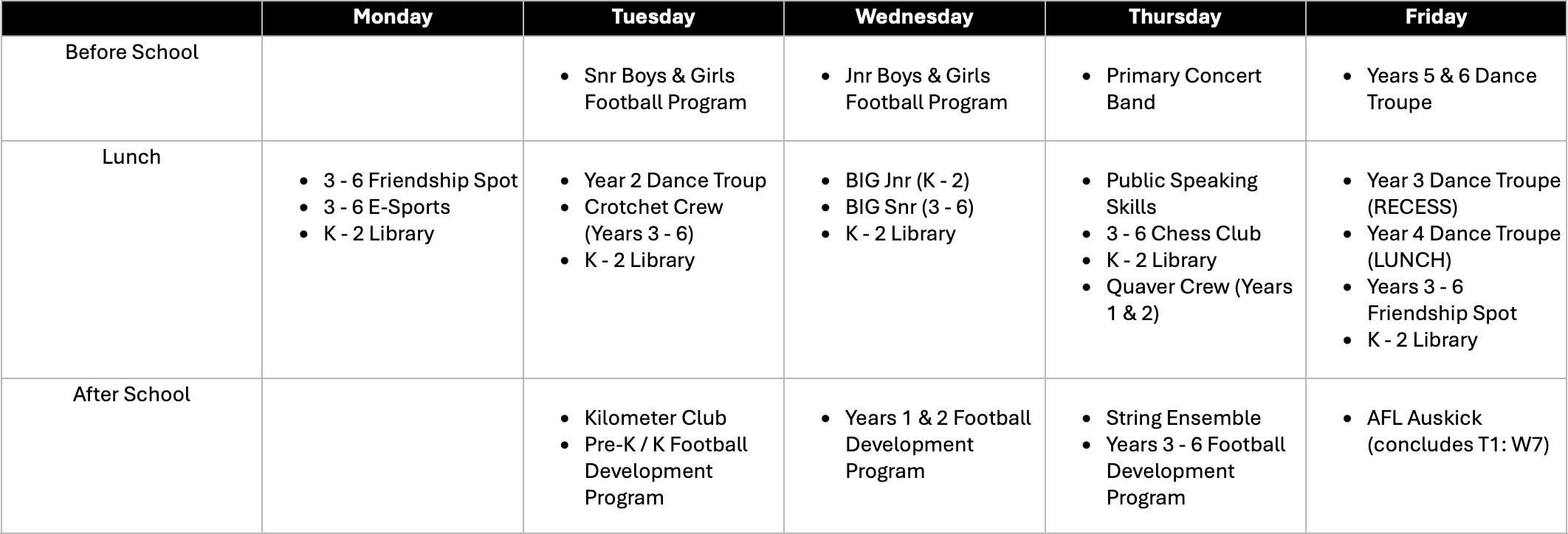
We desire our students to have a balanced approach to their schooling, which is supported by our range of cocurricular opportunities. These activities are provided before and after school, and during lunch, by our teachers who are keen to share their skills. Our offerings are fluid from year to year.
The following table highlights our offerings in Semester 1, noting that for some activities listed here, such as Dance Troupe and before / after school activities, places have already been filled.
Access around the campus
Penrith Anglican College is a ‘child safe’ school. Parents and visitors must always follow the directions of College staff when they are present on Campus and ensure they only access areas and buildings with express permission from College staff. Parents cannot access spaces, such as classrooms, or approach any students at the College without permission and a member of staff present. Unless otherwise specified, parents and visitors to the College must sign in at the Administration Building and adhere to the agreed upon purpose for their visit.
